How Many Streams Do You Need to Trigger Spotify Algorithmic Playlists in 2026? (508-Song Data Study + Sustainable Growth Strategy)
Every artist asks the same question:
How many streams do I need to get on Discover Weekly?
What triggers Spotify Radio?
Is Release Radar enough?
Most answers online are guesses.
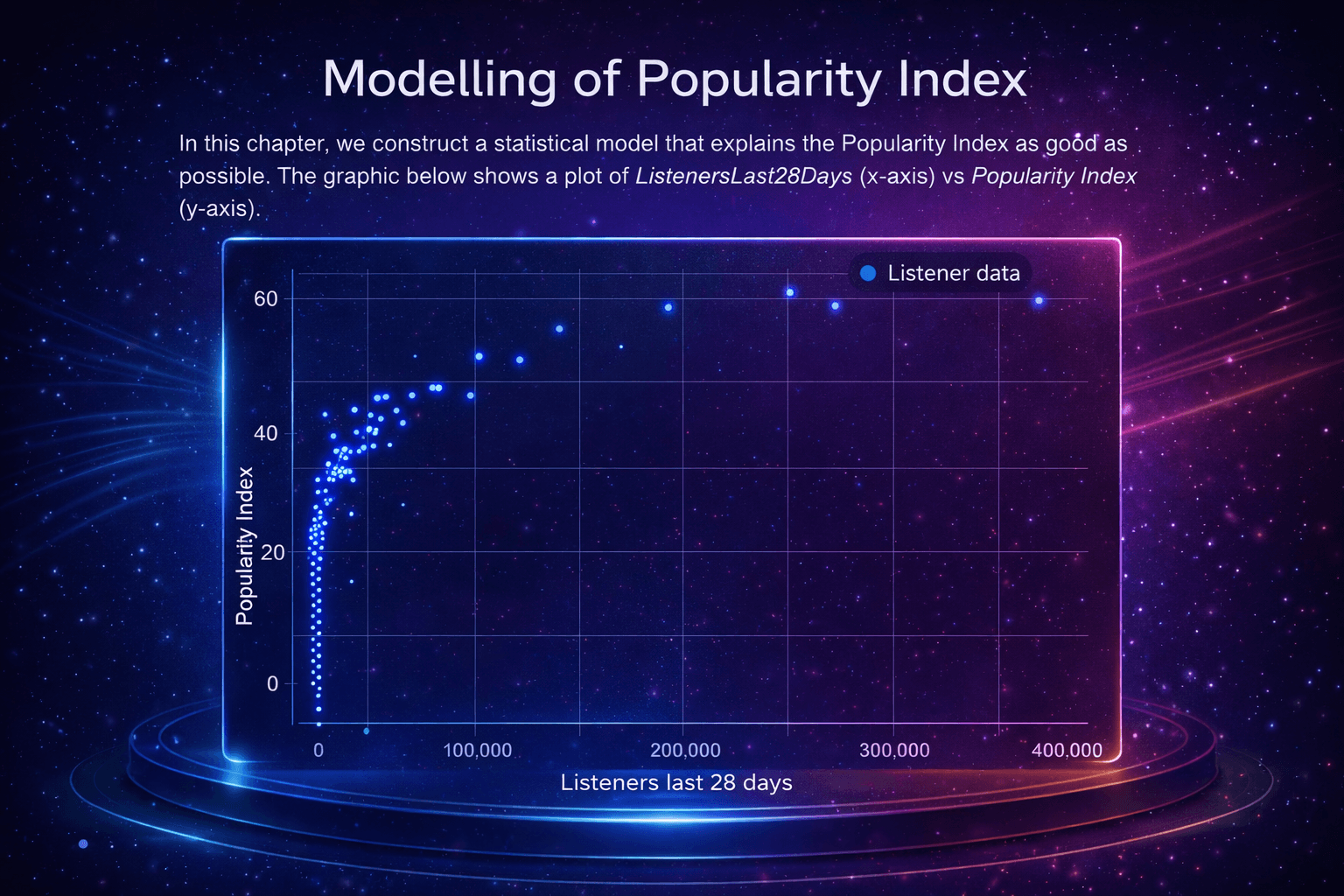
So instead of repeating myths, we analyzed 508 real songs and modeled the relationship between 28-day listeners and Spotify’s Popularity Index.
The Core Insight: Spotify’s Algorithm Responds to Listener Velocity
The model shows a strong statistical relationship between:
Listeners in the last 28 days → Popularity Index
The relationship follows a logarithmic curve:
Early listener growth increases PI rapidly
Higher tiers require exponentially more listeners
Spikes don’t sustain ranking
Translation:
Spotify rewards consistent listener momentum, not artificial bursts.
That single insight explains why many artists hit 5,000 streams… and then disappear.
Understanding Popularity Index Levels
Most artists don’t understand where they actually stand.
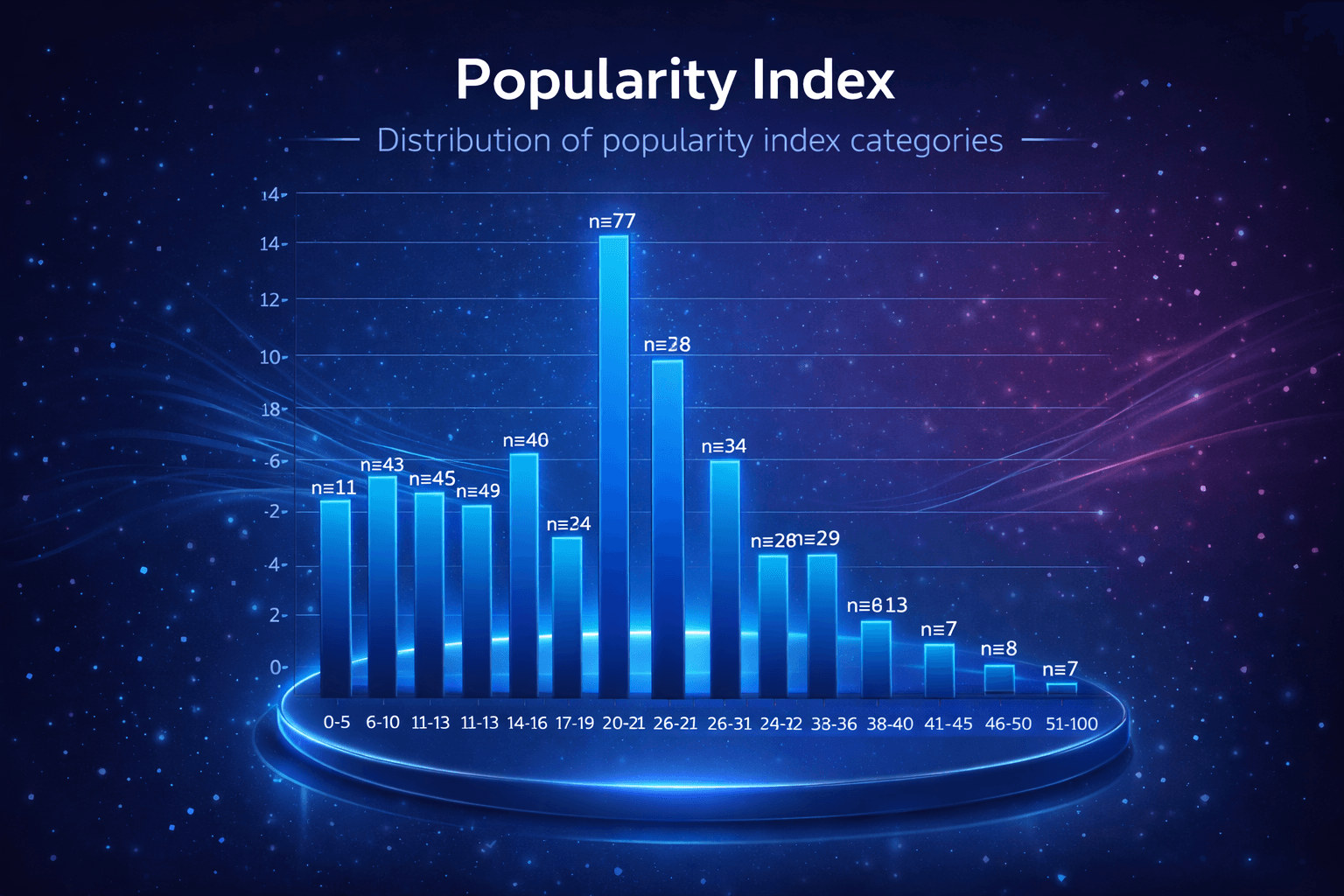
The distribution shows:
The majority of songs sit between PI 16–25
Very few cross into 31–40
Almost none sustain above 40
This means:
Algorithmic scaling is rare.
Not because Spotify is unfair.
Because sustained listener velocity is difficult.
That’s the real barrier.
Release Radar: A Launch Boost, Not a Growth Engine
Many promo services promise “Release Radar exposure.”
But Release Radar is time-limited. It mostly activates in the first 4–5 weeks after release.
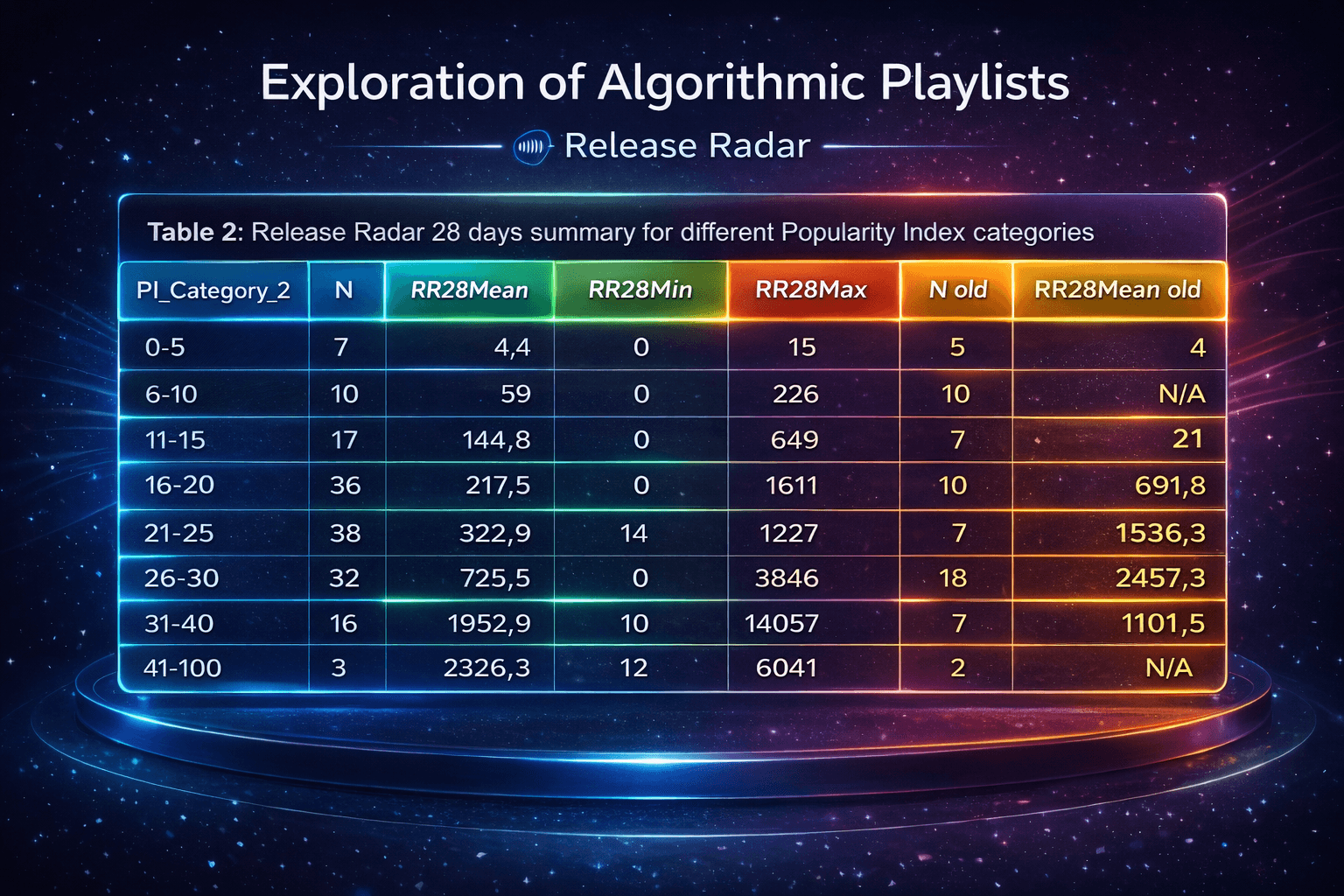
What the data shows:
PI 21–25: modest exposure
PI 26–30: noticeable but limited
PI 31–40: stronger, but still secondary
Release Radar helps launches.
It does not build long-term growth.
If your strategy depends only on it, your trajectory will plateau.
Discover Weekly: The Real Threshold
Discover Weekly activation becomes meaningful around:
PI 26–30
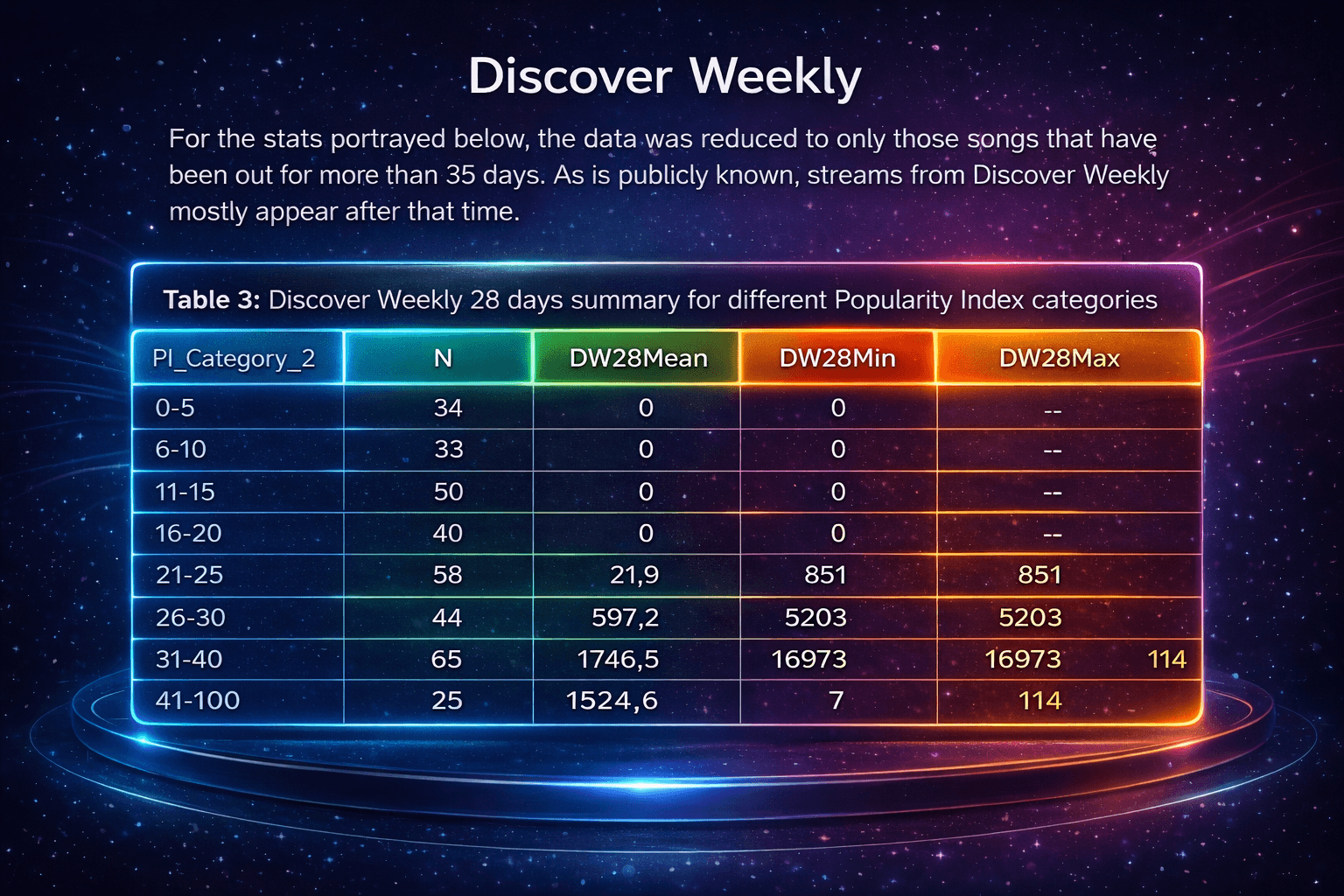
Key findings:
Below PI 20 → near zero exposure
PI 21–25 → minimal activity
PI 26–30 → consistent algorithmic engagement
PI 31–40 → strong scaling
To realistically enter this zone, artists typically need:
4,000–8,000 real listeners in a 28-day window.
Not bots.
Not fake saves.
Real listener behavior.
That’s the threshold most artists underestimate.
Spotify Radio: The Dominant Growth Engine in 2026
This is where most outdated advice fails.
Radio now generates significantly more streams than Discover Weekly in higher PI tiers.
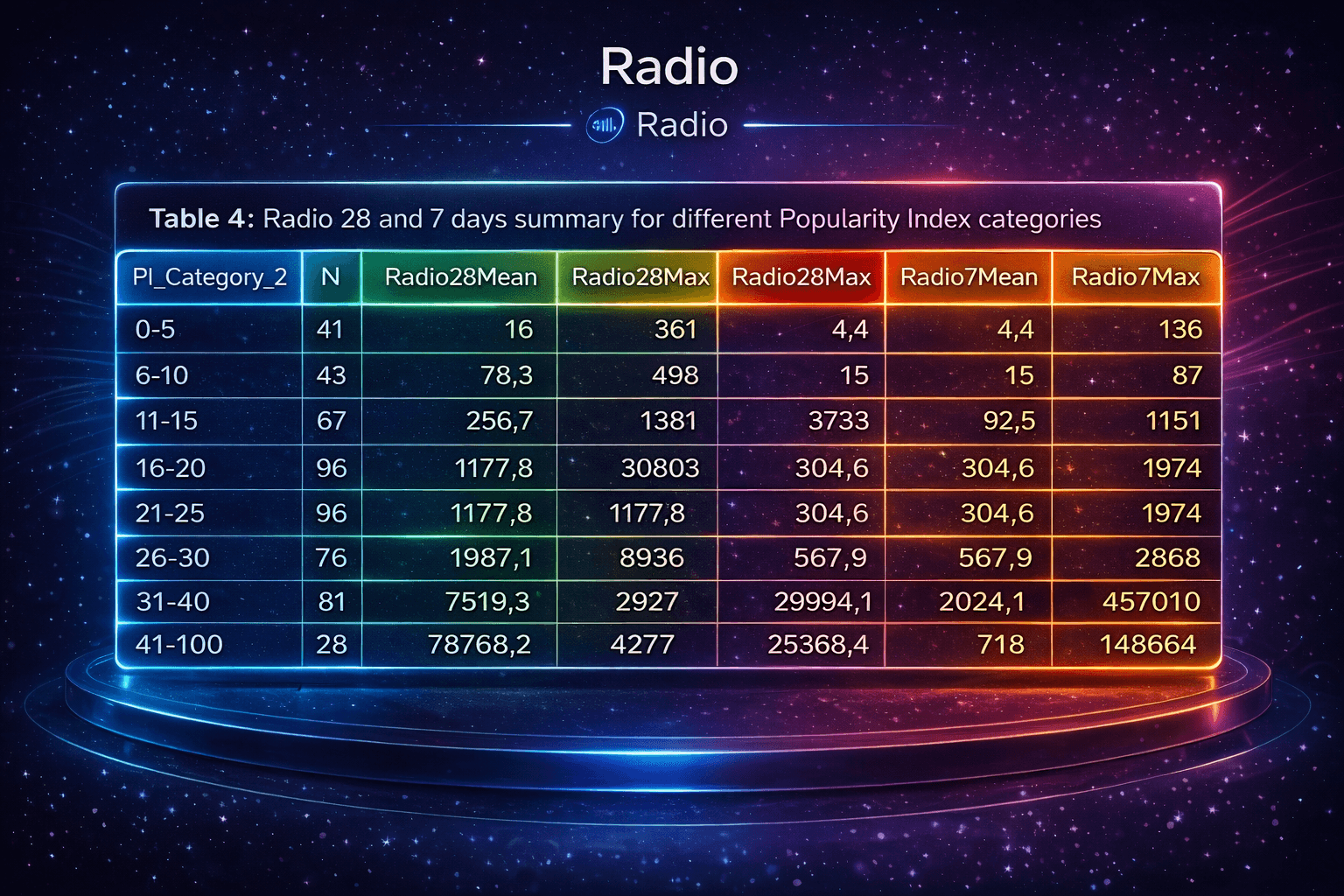
At PI 31–40:
Radio average streams are multiple times higher than Discover Weekly.
And here’s the key:
Radio sustains growth longer.
If Discover Weekly opens the door, Radio builds the house.
How Artists Actually Reach These Levels
Now we look at promotional methods used across the dataset.
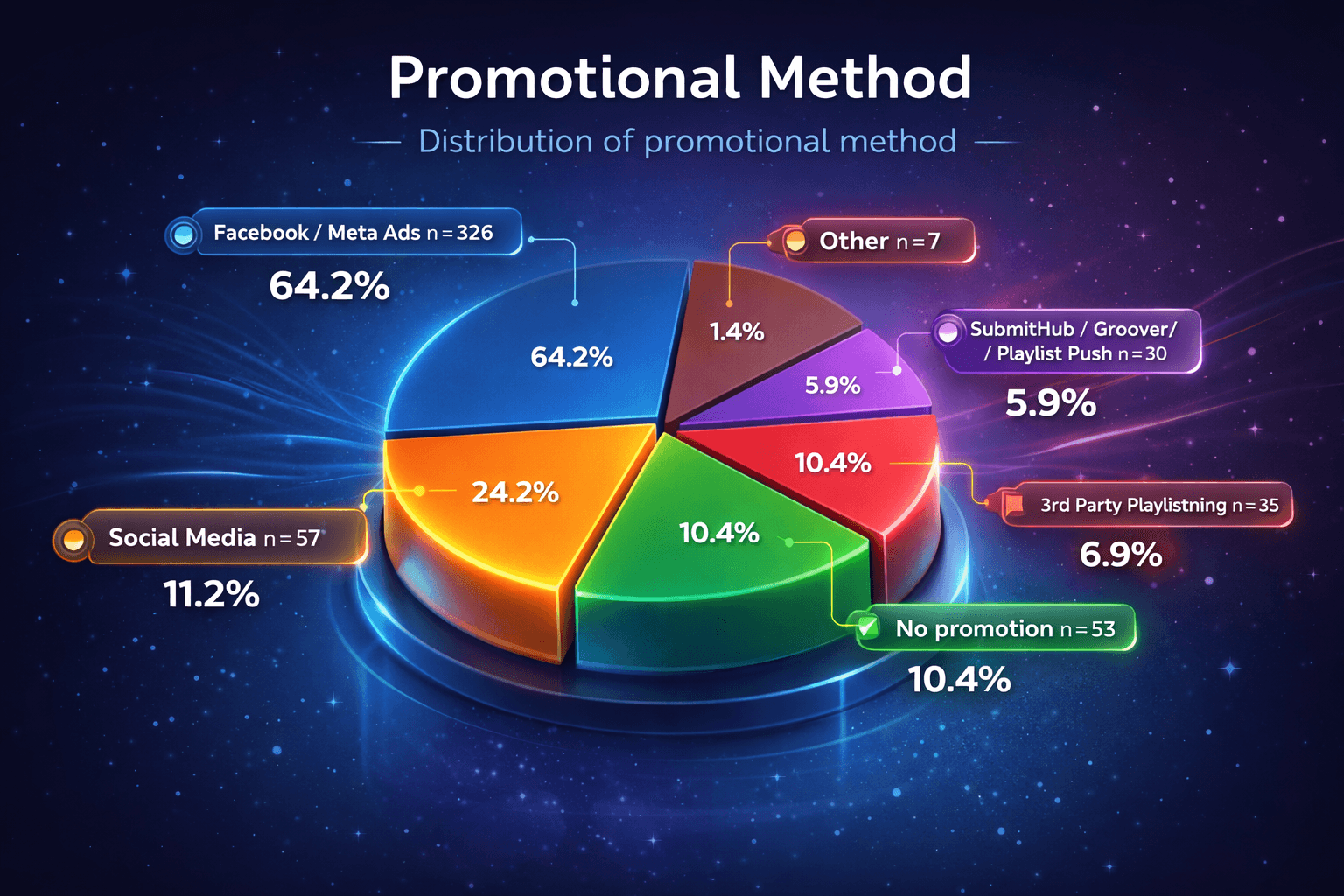
The majority of songs that achieved meaningful algorithmic scaling used:
Traffic-based promotion (Meta Ads).
Not just playlist pitching platforms.
Not just submission tools.
This aligns with what the data already told us:
Spotify reacts to listener behavior, not submission forms.
When real users click, listen, save, and return, the algorithm responds.
Genre Influence on Algorithm Behavior
Genre matters, but momentum matters more.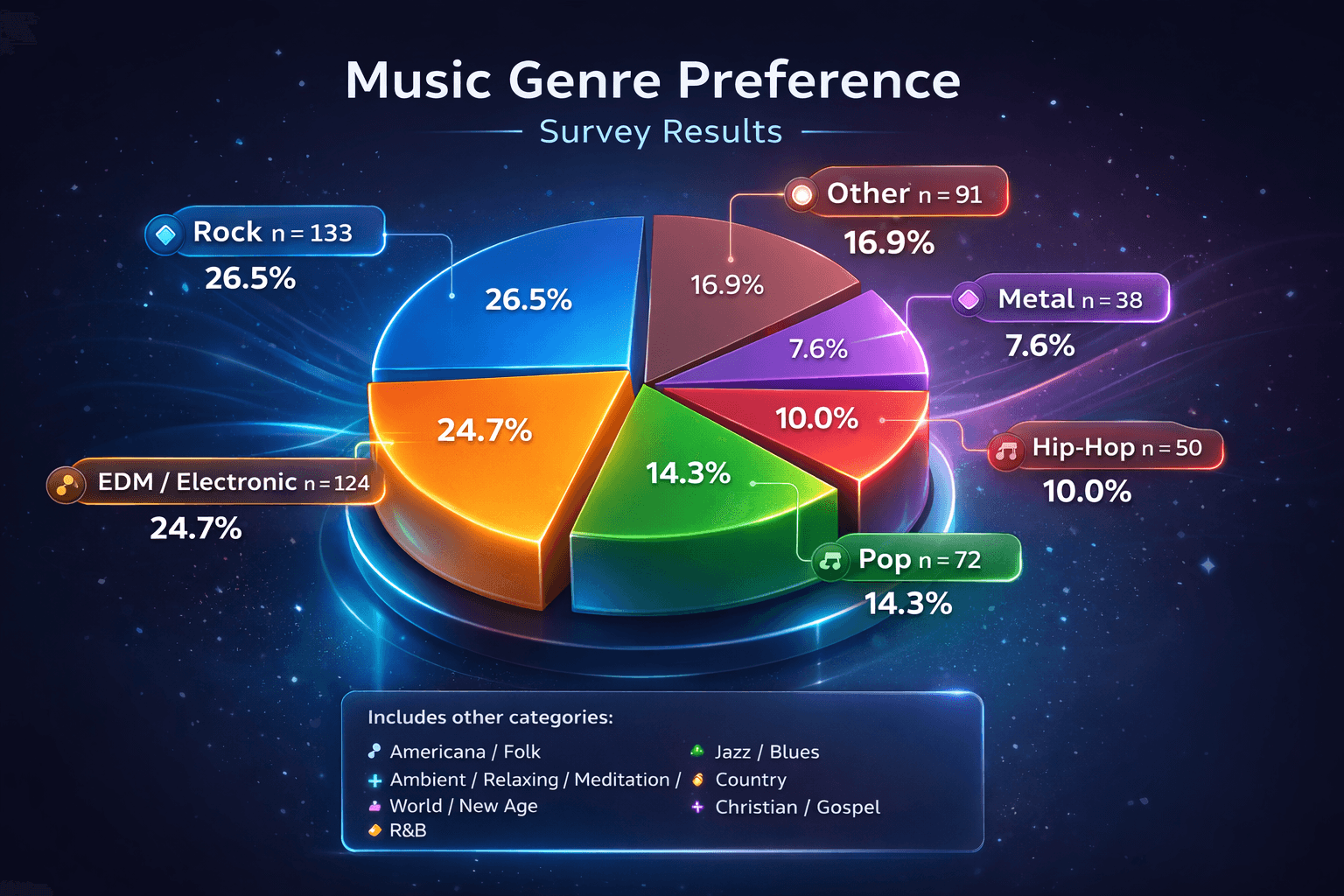
Rock and EDM represent over 50% of the sample.
Yet across genres, the listener → PI relationship remains consistent.
Which means:
The system rewards velocity universally.
The Sustainable Growth Framework (What Actually Works)
Here’s what the research makes clear:
You need a strong 28-day listener base.
You must maintain it beyond week one.
You need sustained traffic — not one spike.
Playlist-only strategies are insufficient in 2026.
This is exactly why we built the Momentum Max Spotify Series at Groove Gainer.
Not as a “playlist package.”
But as a structured listener velocity system.
Instead of:
“Let’s place your track somewhere.”
We focus on:
Controlled Meta Ads traffic
Google traffic layering
Genre-targeted audiences
Save-optimized campaigns
28-day momentum windows
Because the data shows:
Popularity Index growth requires sustained listener input.
And sustained listener input requires structured traffic systems.
Why We Don’t Promise “Guaranteed Discover Weekly”
We don’t guarantee algorithmic playlists.
No honest company should.
What we build is:
The conditions that make algorithm activation statistically likely.
That’s the difference between:
Short-term noise
and
Long-term compounding growth.
What 2026 Thresholds Actually Look Like
Based on the model and observed scaling:
| Goal | 28-Day Listeners | Target PI |
|---|---|---|
| Initial activation | ~2,000 | 20–22 |
| Discover Weekly consistency | 4,000–8,000 | 26–30 |
| Strong Radio scaling | 13,000+ | 31–32 |
| Major algorithm expansion | 18,000–38,000+ | 33–40 |
Anything below that is unlikely to sustain exposure to the algorithm.
That’s not marketing.
That’s math.
The Real Question Artists Should Ask
Not:
“How many streams can I buy?”
But:
“How can I sustain 28-day listener velocity?”
That is the only question that matters in 2026.
And that’s what separates sustainable growth from short-lived spikes.
Why This Matters for Choosing a Promotion Service
Many services focus exclusively on playlist placement numbers.
But the data shows:
Without sustained listener velocity, Popularity Index falls.
And when PI falls, algorithm exposure declines.
So the smarter question becomes:
Does this promotion method build listener momentum?
Or does it create temporary spikes?
That’s the filter.
Final Takeaway
Spotify’s system in 2026 rewards:
Consistency
Velocity
Real engagement
Sustained listener behavior
If your promotion strategy isn’t structured around those principles, you’re fighting outdated dynamics.
At Groove Gainer, we built Momentum Max based on this research because:
Growth should be measurable.
Sustainable.
And aligned with how the algorithm actually works.